Kyōto YouMe Triennale

Kyōto YouMe Triennale

Programme

Programme

Programme

YouMe Main Exhibition

Insitutional Exhibition
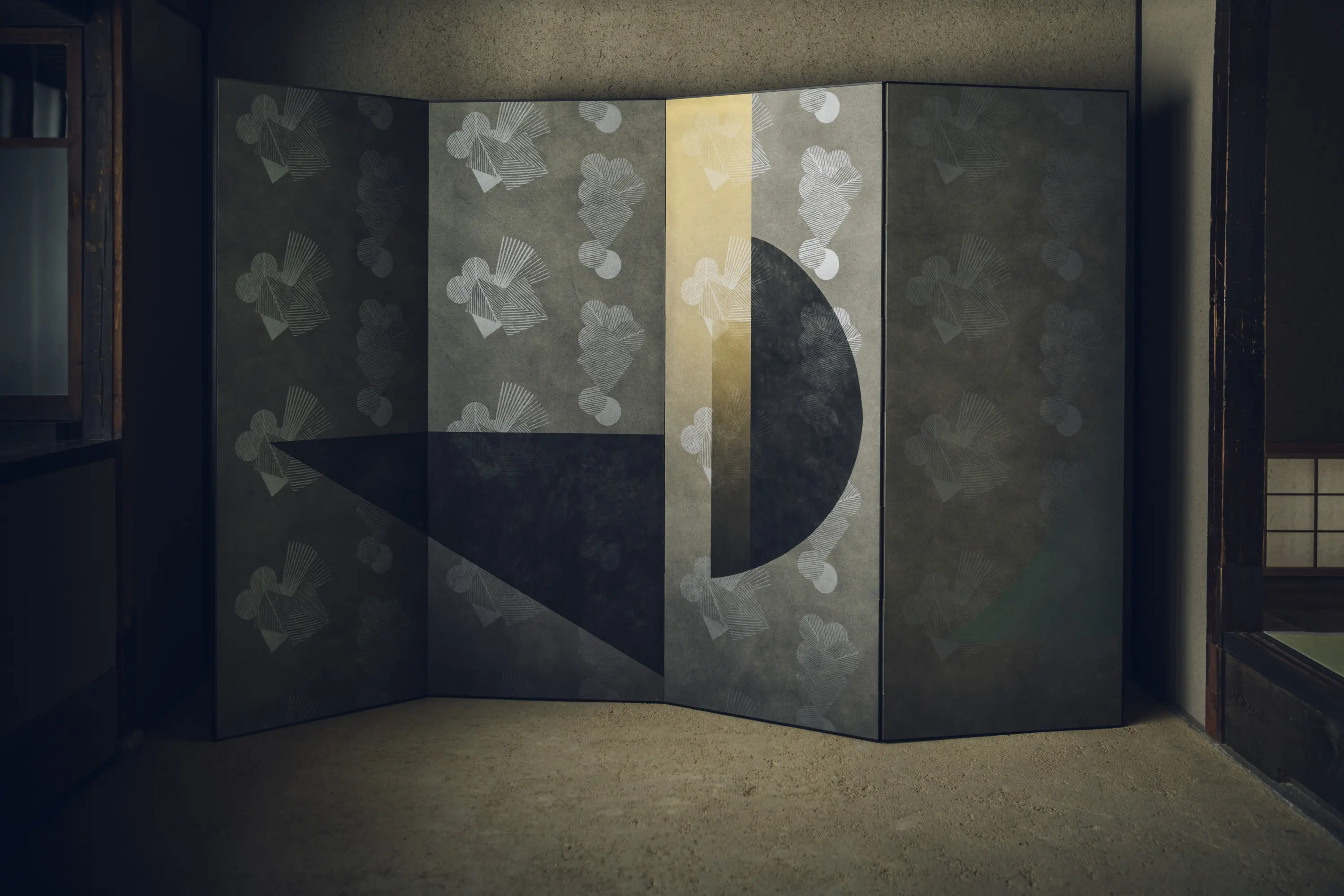
Shosei-en

Shosei-en

Shōsei-en is the detached garden of Higashi Honganji, kept for generations as a place for poetry, tea and Noh, and designated a national Place of Scenic Beauty in 1936 as a temple garden steeped in literati taste. For the Kyōto YouMe Triennale, the Manifesto exhibition opens at the Great Entrance, Adaptive Radiation occupies Rōfūtei, and the Liberty 150th Anniversary exhibition unfolds across Rinchitei, Tekisuiken and the garden itself. Where art, craft and design are laid over rooms three and a half centuries in the making, the question of what it means to create is asked again.

Shōsei-en is the detached garden of Higashi Honganji, kept for generations as a place for poetry, tea and Noh, and designated a national Place of Scenic Beauty in 1936 as a temple garden steeped in literati taste. For the Kyōto YouMe Triennale, the Manifesto exhibition opens at the Great Entrance, Adaptive Radiation occupies Rōfūtei, and the Liberty 150th Anniversary exhibition unfolds across Rinchitei, Tekisuiken and the garden itself. Where art, craft and design are laid over rooms three and a half centuries in the making, the question of what it means to create is asked again.

Edition Manifesto Exhibition

Curators: Harry Pearce, Alessandro Biamonti

Art Direction: Pentagram

Exhibition Design: LABIRINT — Design Dept., Politecnico di Milano

The Edition Manifesto Exhibition is the point of departure for the Kyōto YouMe Triennale. It sets out the framework of the MANIFESTO Edition, placing art, craft and design side by side as interconnected forms of creativity. Opening a dialogue between tradition and innovation, and between local knowledge and global perspectives, the exhibition proposes making not as a means of production, but as a universal human practice — one that generates meaning, relationships and new ways of seeing.

Edition Manifesto Exhibition

Curators: Harry Pearce, Alessandro Biamonti

Art Direction: Pentagram

Exhibition Design: LABIRINT — Design Dept., Politecnico di Milano

The Edition Manifesto Exhibition is the point of departure for the Kyōto YouMe Triennale. It sets out the framework of the MANIFESTO Edition, placing art, craft and design side by side as interconnected forms of creativity. Opening a dialogue between tradition and innovation, and between local knowledge and global perspectives, the exhibition proposes making not as a means of production, but as a universal human practice — one that generates meaning, relationships and new ways of seeing.

Cultural Exhibition

Jushin-Kaikan

Completed in 1930, Jushin Kaikan served first as an office for the Shinshū Ōtani-ha foundation and later as a dormitory for Otani University. For the Kyōto YouMe Triennale, the Cultural Exhibition fills the building floor by floor. In the basement, Project Blue traces the history of a blue that begins in the mountains of Afghanistan. On the ground floor, Harry Pearce's It's All Our Blood puts a question to the world in work made from the artist's own blood. On the first floor, Le Mani Pensano brings together four Italian artists on the passage of making from thought to action to language. On the second, Design As Memory, by artists from Qatar and the United Arab Emirates, reconsiders design as a record of culture, alongside THE FUTURE IS HANDMADE from India, which looks to the future of work made by hand. To make is at times to answer the conditions of a society, at times to object to them, and to propose a better world. Here, in this place, we think together about drawing a future and giving it new meaning.


The Future is Handmade
India

Curator: Esha Gupta

Coordination: DESIGN PATAKI

In India, making has always been a way of life. For centuries, our textiles, objects, architecture, and crafts have been shaped by the human hand, carrying forward genera- tions of knowledge, skill, and creativity. In an increasingly automated world, the human hand remains one of design's most power- ful tools. This exhibition celebrates practices that combine experimentation, material exploration, and craftsmanship to create work that is both deeply personal and globally relevant. Moving fluidly between art, design, and technology, the participating creatives demon- strate how making can become a process of discovery, innovation, and expression. The future envisioned here is not defined by speed or scale, but by intention, originality, and the enduring value of human creativity.

The Future is Handmade
India

Curator: Esha Gupta

Coordination: DESIGN PATAKI

In India, making has always been a way of life. For centuries, our textiles, objects, architecture, and crafts have been shaped by the human hand, carrying forward genera- tions of knowledge, skill, and creativity. In an increasingly automated world, the human hand remains one of design's most power- ful tools. This exhibition celebrates practices that combine experimentation, material exploration, and craftsmanship to create work that is both deeply personal and globally relevant. Moving fluidly between art, design, and technology, the participating creatives demon- strate how making can become a process of discovery, innovation, and expression. The future envisioned here is not defined by speed or scale, but by intention, originality, and the enduring value of human creativity.

Stay connected

Updates on programme, artists, and tickets.

Kyōto YouMe Triennale

Art Design Craft

October 2026, Kyoto Japan

Connect


info@you-me-kyoto.org


© 2026 Kyōto YouMe Triennale